
We partner with agricultural and commercial property owners to develop solar and battery storage projects on land that can support them. We handle permitting, utility coordination, community engagement, and construction — then take an ownership position in the finished project.
Whether you’re a farmer with open acreage or a commercial property owner with underused land, the commitment is the same: we’re in this together, for the long haul.
→ Agricultural & Rural — Farmers, ranchers, and rural landowners
→ Commercial & Industrial — C&I owners, industrial REITs, logistics and brownfield owners
Agricultural & Rural
Long-term income. Careful stewardship. A counterparty that will still be there in year twenty.
We partner with farmers, ranchers, and rural landowners to develop solar and battery storage projects on land that can support them. Long-term lease income that doesn’t depend on a growing season. Stewardship of the soil and the parts of the parcel that stay in production. A clear decommissioning obligation at end of life. Most of all, a long-term partner: the company you sign with is the company that owns and operates the project for the life of the lease.
What the process looks like
- Initial review. You tell us about the property. We look at interconnection, zoning, and access before taking up much of your time.
- Site visit and terms. If it works, we walk the property and put terms in front of you.
- Development. Permitting, utility studies, and community engagement. This is the long stretch, and it’s on us.
- Construction. We build the project.
- Operations. The project runs for decades. We’re an owner, not a name on a contract that got sold.
Frequently Asked Questions
How does a solar land lease work?
A solar land lease is a long-term agreement — typically 25 to 40 years — in which a property owner allows a solar or battery storage project to be developed on their land in exchange for annual lease payments. The developer handles permitting, construction, and operations. The landowner receives steady income without selling the property (unless the landowner prefers to sell and receive an upfront payment). At the end of the lease, the developer is obligated to remove all equipment and restore the land.
How much land do I need?
Most of our projects require 20 to 60 acres of contiguous, relatively flat land. Battery storage projects can work on much smaller areas (less than ¼ acre). We’ll tell you early whether your property is a realistic fit.
How long is the lease?
Lease terms typically run 25 to 40 years, with renewal options. We’ll walk you through the full structure before anything is signed.
What does it pay?
Lease payments vary based on location, acreage, and project type. We’ll put specific terms in front of you once we’ve reviewed the site — we don’t quote numbers before we know what we’re working with.
What happens to my land during construction?
The footprint of the project is clearly defined in the lease. Areas outside the project boundary stay in your control. We coordinate construction access and timeline directly with you.
What happens to the land at the end of the lease?
We’re obligated to decommission the project and restore the land to its prior condition. That obligation is written into the lease and backed by a decommissioning plan.
Do I have to stop farming the rest of my land?
No. The lease covers the project area only. The remainder of your property continues as before, and in some configurations, limited agricultural activity can continue within the project boundary.
Will this affect my property taxes?
Possibly, but we pay any and all increases. In most of our markets, we negotiate a Payment in Lieu of Taxes agreement with the local municipality.
Commercial & Industrial
Underused land is an underused asset
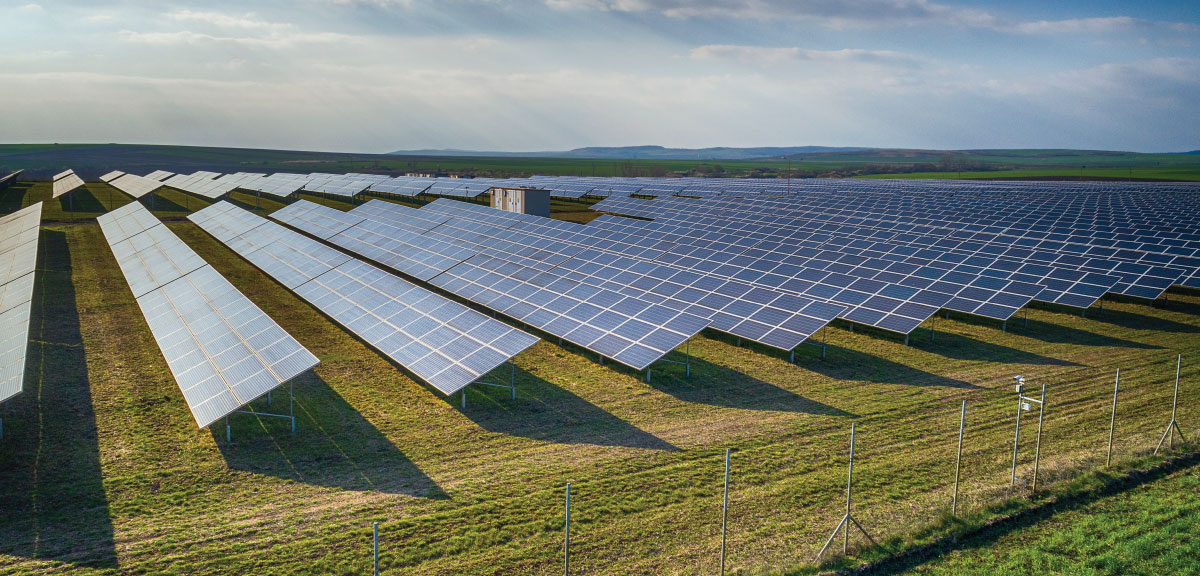
We work with commercial and industrial property owners, industrial REITs, logistics property owners, and brownfield owners to develop solar and battery storage projects on land that isn’t earning its full potential.
Warehouse and logistics properties, industrial-zoned parcels, excess acreage behind existing buildings, and brownfields can be strong solar and storage sites — particularly where they sit close to electrical infrastructure. We review single properties and full portfolios, and structure leases and acquisitions to fit how the asset is held.
What the process looks like
- Portfolio or property review. You share what you have. We assess interconnection, zoning, and site characteristics — quickly and without committing much of your time.
- Site visit and terms. If it works, we put terms in front of you. Lease or acquisition, depending on the situation.
- Development. Permitting, utility coordination, and all regulatory work. On us.
- Construction. We build and manage it.
- Operations. We hold an ownership position and stay involved for the life of the asset.
Frequently Asked Questions
What types of properties work best?
Industrial-zoned parcels, logistics and warehouse properties, brownfields, and excess acreage with proximity to electrical infrastructure. We’ll tell you quickly if a property is worth pursuing.
Do you review full portfolios?
Yes. If you hold multiple properties across a region, we can assess the portfolio as a whole and identify the best candidates.
Do you lease or acquire?
Both. The structure depends on how you hold the asset and what makes sense for your situation.
What size projects do you develop?
Typically 5 to 20 MW AC. The right size depends on the parcel, the interconnection point, and the market.
How long does development take?
Permitting and interconnection timelines vary by market. In our core markets we have direct experience navigating those processes. We’ll give you a realistic timeline before you commit to anything.
What's the impact on adjacent operations?
The project footprint is defined in the agreement. Development and construction are coordinated to minimize disruption to adjacent operations.
What happens at the end of the agreement?
Decommissioning is our obligation. We remove all equipment and restore the site. That commitment is written into the agreement.
Power Solutions Built to Last.
info@aurorari.com